1. Apply ice.
2. Return to a neutral standing position.
While the pain may prompt you to stay put, it’s important to stand upright to prevent further damage. If a back injury happens while you’re bending over, there’s a right way to get yourself into a neutral standing position.
- Slowly bend your knees and place hands on your thighs for support.
- While keeping knees bent, lower your tailbone towards the ground.
- Gently lift your trunk and extend knees.
- Once your shoulders are over your hips, you’ll be in a neutral posture. Your back should feel long and not arched.
- If there is a wall close by, stand against it for support.
3. Avoid movements that can worsen a back strain.
- If you need something picked up from the floor, ask someone to help.
- If you are alone, gently move into a squatting position while looking upwards. This will ease the stress on your back.
- If you need to lean forward, hinge at your hip instead of bending to keep your back straight.
- When you can’t avoid turning, rotate your entire body rather than twisting spinal muscles.
4. Manage pain with over-the-counter medication.
Managing your back injury also means managing your pain. Over-the-counter medications such as aspirin and acetaminophen (Tylenol) will help relieve pain. Ibuprofen (Advil, Motrin) and naproxen (Aleve) will also help ease pain and swelling.
5. Practice self-care to support back recovery.
A little rest and self-care will go a long way to maintain back stability.
- Lie on on your back on a firm surface and place a pillow under your knees to relax back muscles.
- A special lumbar pillow or support can also be used to remove pressure from your back. A rolled up towel placed behind the curve of your lower back also works.
- Avoid lying on your stomach, which can put unnecessary pressure on your back.
6. Try gentle yoga and stretching.
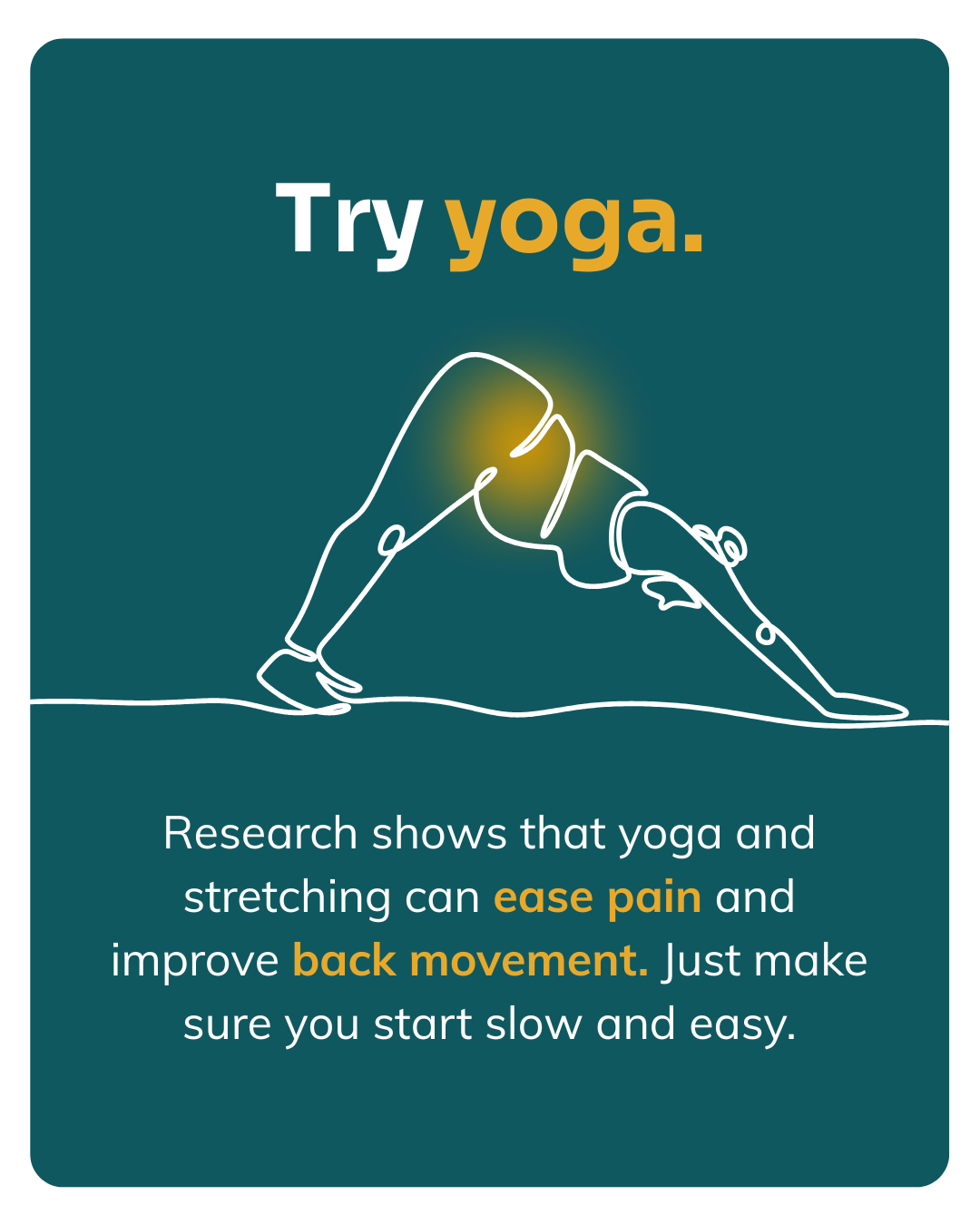
- Lie on the floor on your back with your knees bent and feet flat on the floor. If it’s painful to lie on the floor, you can also stand against a wall.
- As your condition improves, hug one knee to your chest while slowly straightening your other leg on the floor. Gently move the bent leg slightly away from and closer to your chest. Repeat with the other leg.
7. Gradually return to exercise.
As your back improves, gradually ease into more demanding physical activity. Just remember that it will take time to get back to where you were, but it can be done if you’re careful with your exercise regimen.
8. Know when to seek medical care for lower back pain.
Your injury may require more than home remedies and OTC pain relievers. If you can’t find relief or experience any of the following symptoms, visit your nearby Indigo Urgent Care:
- Inability to stand
- Numbness in the back
- High fever
- Abnormal bowel movements
Indigo has more than 45 locations with onsite x-ray. Our friendly providers will assess your injury and provide a treatment plan to manage your specific symptoms. And if you need additional care, we’ll refer you to a specialist.
9. Be patient during your recovery.
Even when you take the proper steps to care for your thrown-out back, healing takes time. And stressing over your injury won’t help. In fact, the added stress can further tighten your already-aching back and make things work.
Take time to take care of your back. As your condition improves, your muscles will begin to relax, and it’s likely you’ll be back in action within a few days or weeks.
Frequently Asked Questions About a Thrown-Out Back
How do I know if I threw out my back?
Common symptoms include sudden lower back pain, muscle spasms, stiffness, difficulty standing upright, and pain that worsens with movement.
How long does a thrown-out back take to heal?
Many mild back strains improve within a few days to a few weeks, depending on the severity of the injury and your activity level.
Should I use ice or heat on a back injury?
Ice is typically recommended during the first 24 to 48 hours after a back injury to help reduce inflammation. Heat may be helpful later for muscle tension and stiffness.
When should I see a doctor for lower back pain?
Seek medical care if you experience severe pain, numbness, fever, loss of bowel or bladder control, difficulty standing, or symptoms that continue to worsen.
Indigo is here when back injuries slow you down
If you’re experiencing back pain, Indigo Urgent Care can help.
We’re all about making sure you get the care you need, when you need it – without the long wait. Walk into one of our convenient neighborhood locations, book a same-day or next-day appointment online, or meet face-to-face with an Indigo Virtual Care clinician. However you choose to connect, we’re here from 8 am to 8 pm every day, including weekends.
During your visit, one of our friendly clinicians will evaluate your back pain and provide guidance on how to manage your specific symptoms. They can also suggest prevention tips and lifestyle changes that can help reduce your risk of future back pain. And if you need additional care, we’ll help connect you to the right specialist.