If your lower back aches, your shoulders feel tight and you’re a woman in your 40s (or getting close), there’s a good chance perimenopause is part of the story.
(Because of course your body would switch things up on you now.)
This transitional phase can bring plenty of surprises – and back pain is one of them.
How does perimenopause affect the body?
Perimenopause is the time leading up to menopause, sometimes lasting several years. It’s driven by fluctuating hormones, especially estrogen and progesterone.
Think of it as your body’s “systems update you didn’t agree to but still installed” stage.
These shifts can show up in a lot of ways, including irregular periods, sleep changes, mood shifts, and general aches and pains that come out of nowhere.
Estrogen, in particular, plays a bigger role than most people realize. When it’s in flux, your body may feel it in ways that go beyond your cycle.
Why is back pain so common during perimenopause?
Back pain in perimenopause isn’t random – even when it feels like it showed up suddenly. It’s usually a combination of a few hormone-related changes:
- Less support for your spine: Lower estrogen levels can lead to decreased bone density and changes in spinal discs, making your back more vulnerable to strain and stiffness.
- Increased inflammation: Estrogen helps regulate inflammation. When levels drop, inflammation can rise – leading to more aches in your joints, muscles and lower back.
- Changes in connective tissue. Hormonal shifts can affect collagen and muscle mass, which support your spine and posture. Less support means more discomfort.
- Heightened pain sensitivity. Emerging research describes a condition called “musculoskeletal syndrome of menopause,” where falling estrogen is linked to widespread pain, stiffness and fatigue.
So no – it’s not “just getting older.” It’s your body adjusting to a shifting hormonal baseline and occasionally making its feelings known – loudly.
What does perimenopause-related back pain feel like?
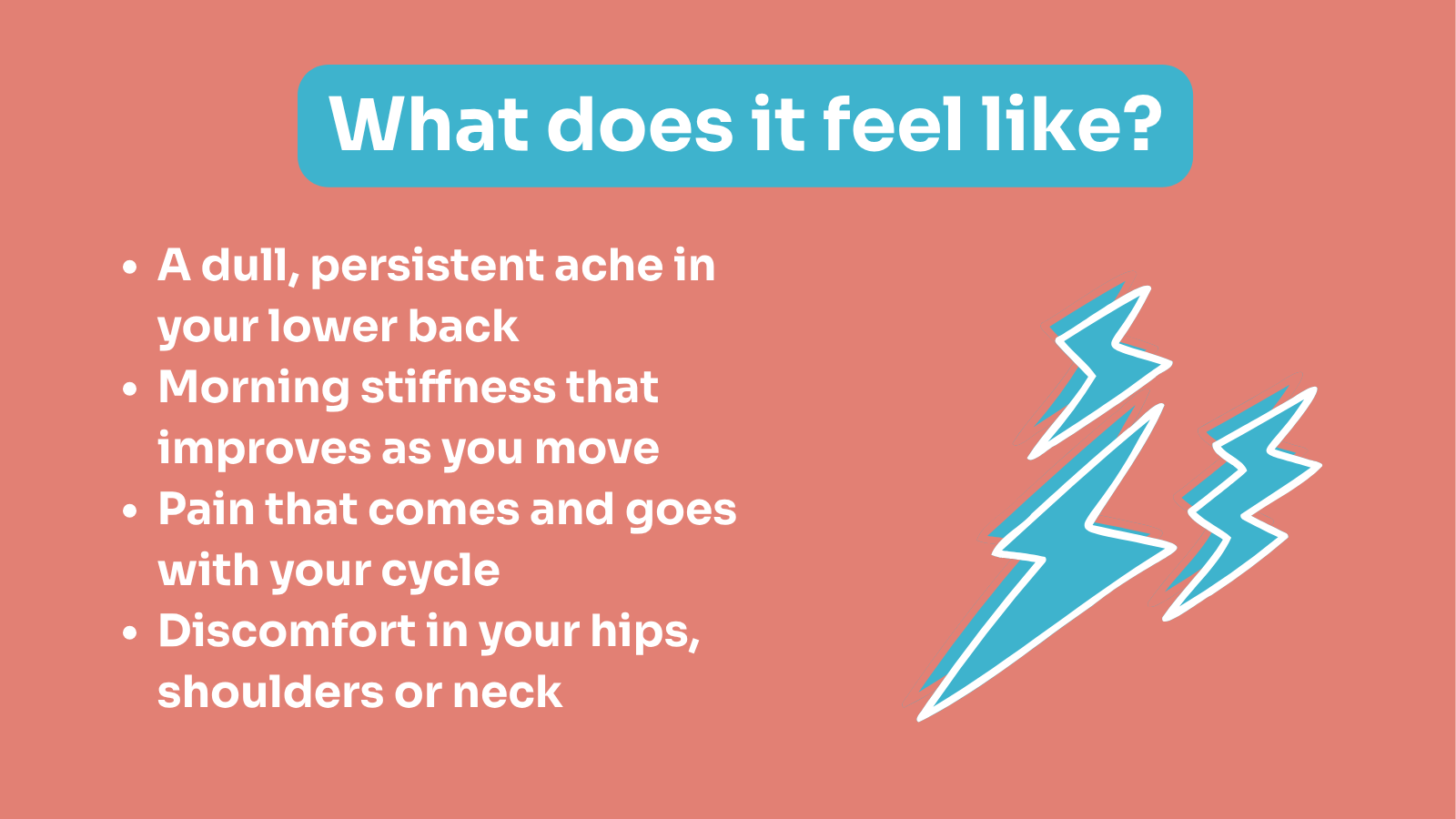
Sound familiar? You’re not imagining it – and you’re definitely not the only one dealing with it. Studies show that as many as 83 percent of women going through perimenopause experience low back pain.
Is it always hormones?
Not every backache in your 40s is perimenopause doing its thing. Sometimes it could be caused by:
- Prolonged sitting (hello, desk life)
- A new workout (or an old one that didn’t go well)
- Stress showing up in your muscles
- Or just your back being… your back
That’s why a quick visit with a clinician can help rule out other causes, confirm what’s going on and point you toward relief sooner rather than later.
What can I do to relieve my perimenopause-related back pain?
Hormones may be playing a role in your back pain, but there are ways to feel better.
A few simple starting points:
- Keep moving: Gentle strength training, stretching, walking, yoga or cycling all help support muscles and joints. Think low-impact, consistent movement rather than intense workouts.
- Focus on your core: Core-strengthening exercises (like bridges, pelvic tilts or gentle Pilates moves) can help support your spine and reduce strain on your lower back over time.
- Stretch before bed: A few gentle, slow stretches can help your back settle down and avoid overnight stiffness.
- Prioritize sleep: Hormone changes + poor sleep = amplified pain (a truly unfair combo).
- Use heat or ice strategically: Heat for lingering stiffness, ice for flare-ups. Not sure what to reach for? Learn when to use ice vs. heat to treat back pain. [link to story when posted]
- Talk to a health care clinician: Especially if pain is persistent, worsening, or interfering with daily life.
In some cases, physical therapy, anti-inflammatory strategies or hormone therapy may help – depending on your symptoms and health history.
When should I get care for my back pain?
Just because back pain is common in perimenopause doesn’t mean it should be ignored.
It’s a good idea to get checked out if your pain is:
- Severe or sudden
- Radiates down your leg
- Doesn’t improve with rest or self-care
- Affects your daily routine
Indigo – for all of life’s transitions
Perimenopause is already serving up plenty of unexpected twists. Getting care shouldn’t be one of them.
Whether your back pain is out of the blue, lingering longer than you’d like or just plain confusing, Indigo Urgent Care is here to help you figure it out. We’ll listen, evaluate your symptoms and help create a plan that makes the most sense for your life.
There’s no need to wait for answers or relief. Simply walk into one of our convenient Indigo locations or book a same-day or next-day appointment online. And if a trip to a clinic turns your to-do list upside down, opt for an even easier route – Indigo Virtual Care.
In-person or virtually, we’re here from 8 am to 8 pm every day, including weekends.