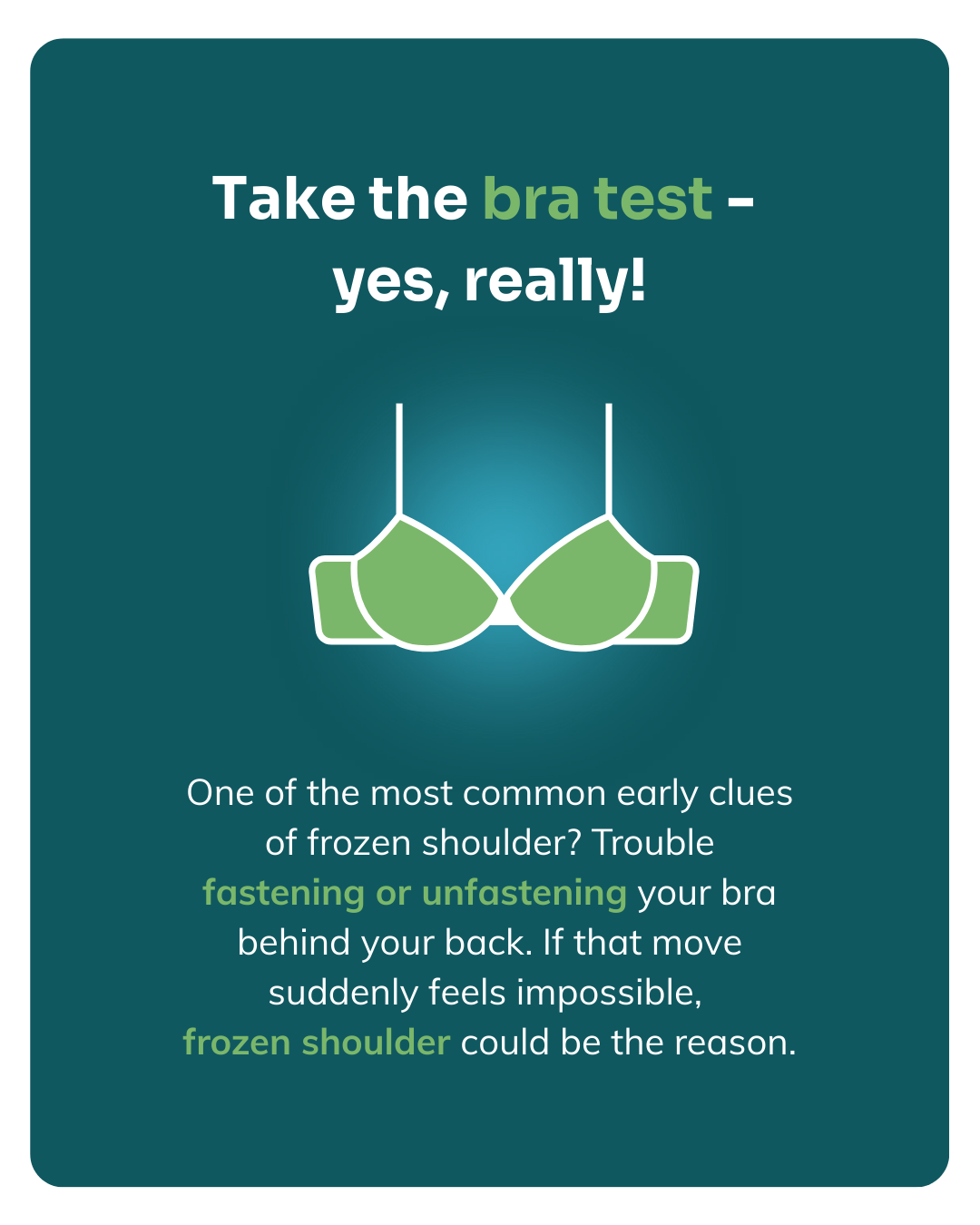
Shoulder issues are a common complaint, but when pain hits and your arm won’t move the way it should, you might have (or be heading toward) frozen shoulder. It may begin with subtle stiffness that’s easy to brush off. Then one day you find that reaching overhead, fastening a bra or even sleeping comfortably becomes surprisingly difficult.
What makes frozen shoulder such a head-scratcher is that it often shows up for no obvious reason. No big fall. No dramatic injury. Just gradual tightening and increased limitation that seem to come out of nowhere – and don’t go away on their own.
What is a frozen shoulder?
Frozen shoulder – also known as adhesive capsulitis – is a condition marked by intense pain and limited joint motion in the shoulder.
Think of your shoulder as a super flexible ball-and-socket joint. It “freezes” when then connective tissue around that joint tightens up and gets inflamed. Suddenly, your shoulder doesn’t move like it used to – and it can hurt, stiffen or flat-out refuse to go in certain directions.
Why does frozen shoulder happen more often in women?
Frozen shoulder can happen to anyone at any time. But the condition most commonly affects women between the ages of 40 and 60, according to the American Academy of Orthopaedic Surgeons. The reasons for this less-than-fair phenomenon include:
- Hormones: Shifting estrogen levels during perimenopause and menopause can affect connective tissue and cause inflammation.
- Health factors: Diabetes, thyroid conditions and autoimmune disorders can raise risk.
- Surgery or medical procedures: Shoulder impairment is a common side effect after breast cancer surgery and reconstruction, as well as other chest or upper-body procedures. Scar tissue, protective movement patterns and post-op inactivity can all contribute.
- Life and lifestyle: Desk jobs, caregiving or long stretches without shoulder movement can add up over time.
What are the stages of a frozen shoulder?
Frozen shoulder usually progresses through three stages – freezing, frozen and thawing.
The freezing stage:
- Pain gradually increases and is often worse at night
- Stiffness slowly builds, making daily tasks more difficult
- Duration: a few months
The frozen stage:
- Pain may ease slightly, but stiffness is dominant
- Day-to-day activities like reaching behind your back, putting on a bra, styling your hair, or lifting groceries or children become challenging
- Duration: several months
The thawing stage:
- Motion gradually returns
- Pain diminishes
- Small improvements happen week by week
- Duration: months, sometimes more than a year
While progress can be slow, the final stage signals that recovery is happening. Sticking with gentle care is what matters most.
When should you seek care for shoulder stiffness?
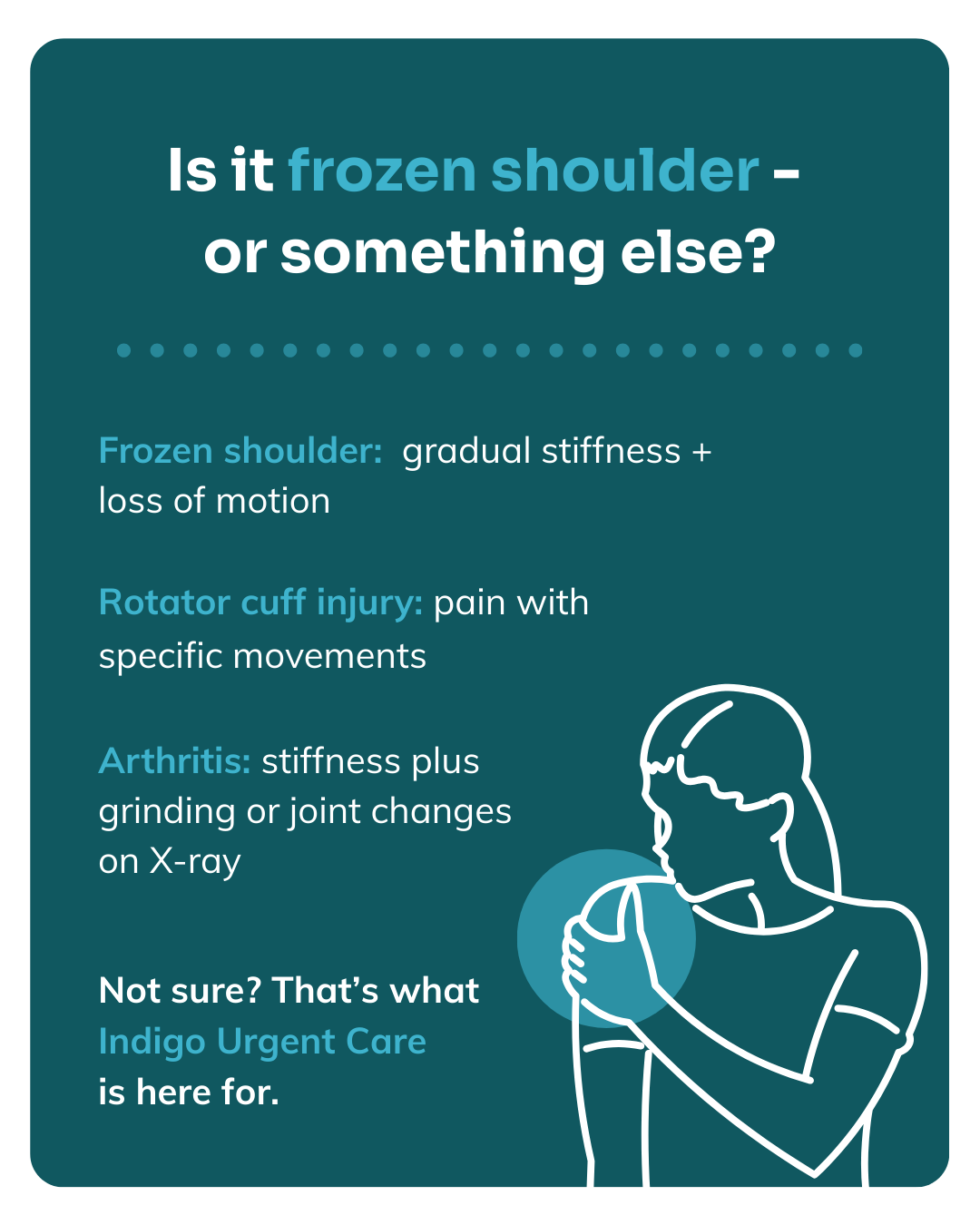
If you have shoulder stiffness or pain that lasts more than a few weeks, it’s worth getting evaluated. Early diagnosis and treatment can significantly shorten your recovery and rule out other issues, like a rotator cuff injury or arthritis.
Consider seeking care if you notice:
- Persistent pain or stiffness
- Difficulty with everyday tasks
- Nighttime discomfort
- Uncertainty about what’s causing the problem
How is frozen shoulder treated?
Frozen shoulder usually improves over time, but there are ways to help speed up recovery and make daily life more manageable. There are multiple treatments designed to reduce inflammation and help regain motion.
Some of the most common approaches include:
- Physical therapy: A physical therapist can help loosen the shoulder capsule that shrinks when you have frozen shoulder. Ongoing therapy and prescribed range-of-motion exercises can help restore your shoulder movement.
- Anti-inflammatory medications: To reduce pain and swelling.
- Activity modification: Avoid movements that aggravate the shoulder, but don’t stop moving entirely.
- Steroid injections: Sometimes used for more stubborn pain or inflammation.
- Surgery or minimally invasive procedures: Rarely needed, but an option if other treatments don’t help.
What can I do at home to help my recovery?
To bounce back from frozen shoulder, small, consistent steps can make a big difference. Combined with physical therapy and other medical care, here are a few things you can do at home to support your recovery:
- Use moist heat before stretching to loosen tissue (use after activity if soreness increases)
- Maintain good posture at your desk or while caring for others
- Perform gentle range-of-motion exercises regularly
- Avoid aggressive power stretching
Recovery takes time, but patience and consistent care usually lead to noticeable improvement.
Indigo makes shoulder care simple
If you’re dealing with shoulder pain – including signs of frozen shoulder – Indigo Urgent Care is a great first stop to get evaluated quickly and start a recovery plan.
Our Indigo clinicians can:
- Evaluate new or worsening shoulder pain and help determine if your symptoms point to frozen shoulder or another condition. They can also rule out more serious conditions.
- Create a personalized treatment plan, prescribe medications, if appropriate, and recommend activity modifications.
- Offer on-site digital X-ray to help assess musculoskeletal injuries.
- Coordinate referrals to specialists or physical therapy if more comprehensive care is needed.
Early assessment is key to a faster – and far less frustrating – recovery. Because Indigo specializes in timely, convenient care, you can get the answers you need without weeks of waiting.
We offer walk-in visits and same-day and next-day appointments at our 40+ clinics, as well as Indigo Virtual Care – so shoulder care fits your schedule, not the other way around.
In-person and virtually, Indigo is here every day from 8 am to 8 pm, including weekends.