Ear pain has a way of showing up at the worst times – bedtime, the middle of the night or right before you head to work. One minute your kiddo seems fine, and the next they’re uncomfortable, fussy or tugging at their ear. It’s a familiar scene for most parents – and it’s not always easy to know what to do next.
The reality is, ear infections are a routine part of childhood. Nearly 5 out of 6 children will have at least one ear infection before their third birthday, according to the American Academy of Pediatrics (AAP), making it one of the most common reasons kids visit a health care provider.
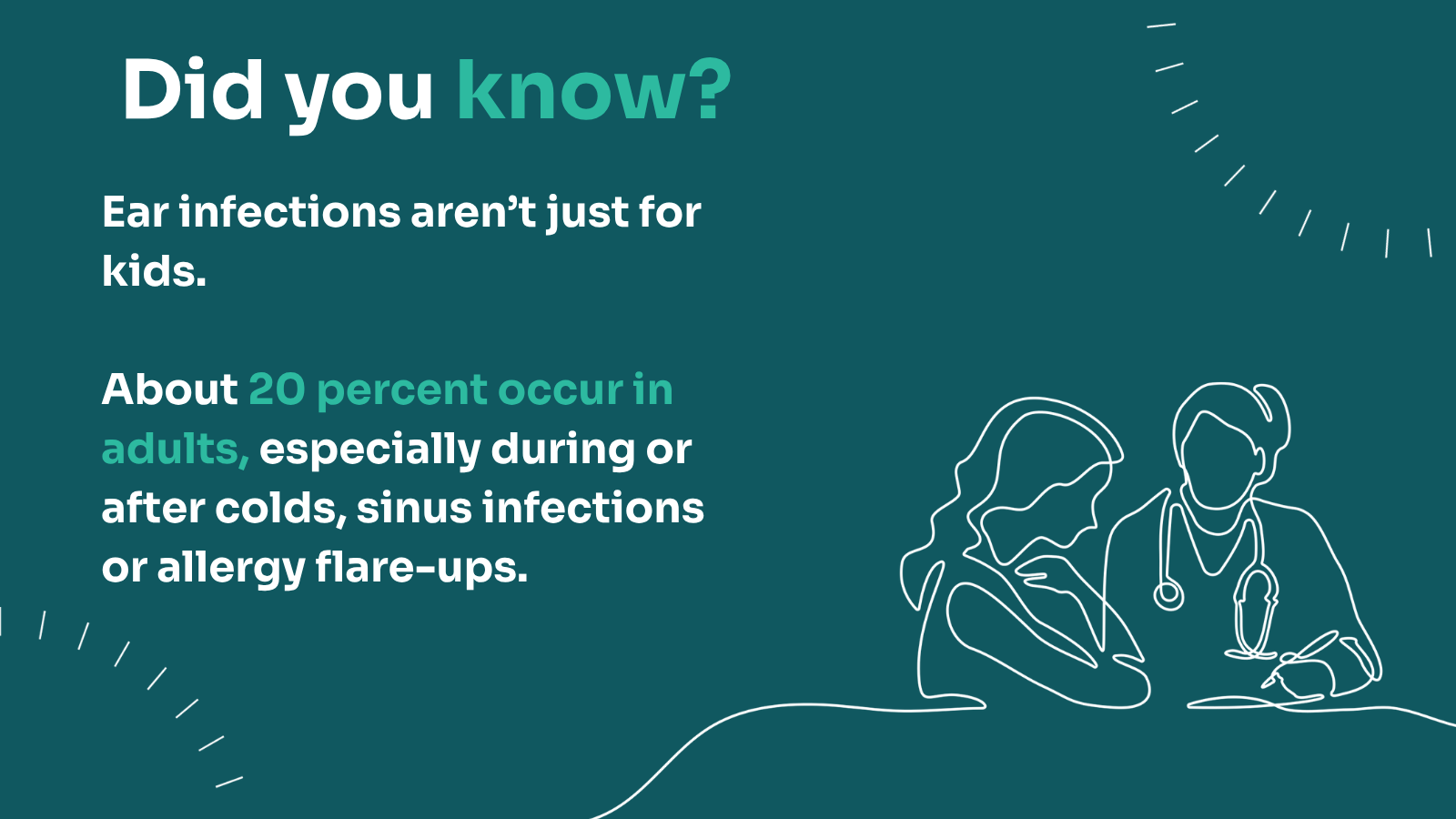
What is an ear infection?
An ear infection happens when fluid gets trapped in the ear, often due to bacteria or a virus. The most common type – especially in kids – is a middle ear infection (otitis media), which affects the space just behind the eardrum.
Children are more prone to these infections because:
- Their eustachian tubes are shorter and more horizontal and don’t work as well as those in adults, which makes it easier for fluid to get trapped
- Their immune system, which helps fight infection, is still developing
- They’re more likely to catch illnesses from other kids
Infections can also occur in other parts of the ear:
- Outer ear infection (otitis externa or swimmer’s ear): This condition is caused by bacteria or fungi that collect in the ear canal, often from trapped water, which can cause swelling, itching or discharge.
- Inner ear infection (often referred to as labyrinthitis): Less common, these are usually viral and affect the inner ear, which controls balance and hearing.
What causes an ear infection?
Ear infections often start with some other condition that causes swelling and blocks the eustachian tube, the small passage that helps drain fluid from the ear. When that drainage is blocked, fluid builds up – and that’s when inflammation and infection can develop.
Common triggers include:
- Colds or upper respiratory infections
- Seasonal allergies
- Exposure to second-hand smoke
- Bottle-feeding while lying flat (in infants)
- Time spent in group childcare settings (for kids)
Genetics can also play a significant role in recurring or chronic ear infections. Research shows they often run in families, making children more likely to experience repeated infections if a parent or sibling has a history of them.
How many are too many?
Some kids (and big people) get ear infections more often than others. If your child has three or more in six months, or four in a year, the condition could be chronic. Learn more about the signs, treatment and prevention of chronic ear infections.
What are common symptoms of an ear infection?
Symptoms of ear infections can look different depending on age.
In babies and younger children, watch for:
- Tugging or pulling at the ear
- Fussiness or unusual crying
- Trouble sleeping
- Less interest in eating
- Fever
- Difficulty hearing or responding to sounds
- Fluid draining from the ear
In older kids, teens and adults, common symptoms include:
- Ear pain or pressure
- Muffled hearing
- A feeling of fullness in the ear
- Mild dizziness or balance issues
Can you treat an ear infection at home?
Many mild ear infections – especially those caused by viruses – can improve on their own within a few days.
You can help ease symptoms with:
- Age-appropriate, over-the-counter pain relievers, such as acetaminophen (Tylenol) or ibuprofen (Advil, Motrin)
PSA:
Never give aspirin to babies, children or teenagers due to the risk of Reye’s syndrome. This rare but serious condition causes dangerous brain swelling and liver damage.
- A warm compress placed over the ear
- Rest and plenty of fluids
For older children and adults, a short “wait-and-watch” period (48-72 hours) can be reasonable.
For younger children, especially if symptoms are more than mild, it’s often best to check in with a health care provider sooner.
When should you seek medical care for an ear infection?
Not every earache means an infection, but some symptoms are a clear sign that it’s time to get care. Seek medical attention if you or your child has:
- Ear pain that lasts more than 2-3 days
- A fever or 102oF (39oC) or higher
- Severe or worsening pain
- Fluid, pus or blood draining from the ear
- Trouble hearing that doesn’t improve
- Frequent or recurring ear infections
For infants under the age of 6 months, contact a health care provider right away if an ear infection is suspected.
Even for older kids and adults, if something doesn’t feel right, it’s a good idea to get checked. A quick evaluation can help confirm whether treatment is needed.
Can ear infections be prevented?
You can’t sidestep every ear infection – especially when genetics come into play – but a few simple habits can help lower your risk:
- Stay up to date on vaccines. When you have fewer illnesses, you also have fewer chances for fluid to build up in the ear. For children, check out the AAP’s recommended child and adolescent immunization schedule. Key immunizations for adults include the pneumococcal and annual flu vaccines.
- Practice good hand hygiene. Regular handwashing with soap and water helps limit the spread of colds and respiratory viruses.
- Avoid exposure to tobacco smoke. Secondhand smoke can irritate and inflame the airways, making it easier for eustachian tubes to become blocked and for infections to develop.
- Breastfeed when possible. Even a few months of breastfeeding can provide immune support that helps reduce the risk of ear infections in infancy.
- Feed babies in an upright position. When infants drink while lying flat, fluid can more easily travel toward the middle ear. Keep them slightly elevated during feedings to help support proper drainage.
- Be mindful with pacifiers. A pacifier can be a helpful, safe sleep aid for young babies, but frequent use has been linked to a higher risk of ear infections. This may be due to how sucking affects pressure and fluid drainage in the ear. The American Academy of Family Physicians (AAFP) recommends weaning from pacifiers after 6 months to help reduce that risk.
- Keep allergies under control. For older children and adults, managing allergies can reduce ongoing inflammation that contributes to fluid buildup in the ears.
For children who have frequent bouts with ear infections, a health care clinician may recommend ear tubes to help drain fluid and prevent middle ear infections.
Relief starts at Indigo
Not sure if it’s an ear infection? We can help.
At Indigo Urgent Care, we make getting care – and peace of mind – fast, easy and straightforward. Just walk into one of our neighborhood locations or book a same-day or next-day appointment online. We’re here from 8 am to 8 pm every day, including weekends.
During your visit, one of our friendly clinicians will gently check your child’s ears, ask about symptoms and medical history, and explain what’s going on in clear, simple terms. If treatment is needed, you’ll leave with a plan to help your child feel better fast.
Wondering where to go for trusted health information?
New survey findings from the Annenberg Public Policy Center show that physicians and the American Medical Association remain among the most trusted sources of public health information.