Our knees carry a lot of weight – probably more than we give them credit for. From workouts and weekend projects to keeping up with the kids, walking the dog and long days at a desk, they’re constantly on the job. Add in old sports injuries, hours sitting or scrolling, and sudden bursts of energy at the gym, it’s no surprise when knee pain creeps in.
Because our knees handle so much daily movement (and weight), they’re one of the most common reasons people visit urgent care each year. Fortunately, most knee issues are manageable with the right care and a little know-how – especially when you catch them early.
What are the most common knee injuries?
Not all knee pain is the same. Some injuries happen suddenly and are obvious, while others build up over time. A few of the most common include:
- Sprains and strains: Stretched or torn ligaments and muscles, often from twisting or overextending the joint.
- Meniscus tears: Damage to the cartilage that cushions your knee, common during sports or quick pivots.
- Tendonitis: Inflammation from overuse, sometimes called “jumper’s knee”.
- Runner’s knee (patellofemoral pain syndrome): Aching pain around the kneecap, often linked to repetitive motion.
- Bursitis: Swelling of the fluid-filled sacs that cushion the joint.
What usually causes knee injuries?
Knee injuries don’t just happen on the field or in the gym. Everyday life can be just as tough on your joints – especially one that’s used so often. Some of the most common causes of knee injuries include:
- Sudden twists or awkward landings
- Overuse from running, high-impact workouts or hiking
- Poor form or lack of stretching
- Carrying extra body weight that adds stress to the joint
- A simple misstep, slip or fall
- Aging and natural wear and tear
Even small habits – like skipping warm-ups or wearing unsupportive shoes – can add up over time.
What can I do to help prevent knee injuries?
You can’t protect your knees from everything, but some simple habits and a little consistency can make a big difference over time:
- Warm up before physical activity. Even five minutes of light walking or dynamic stretching can loosen muscles and prepare your joints for movement.
- Strengthen the muscles around your knee. Building your quads, hamstrings and glutes can stabilize the joint and absorb impact.
- Focus on your form. Whether you’re lifting weights, running or doing yardwork, proper alignment can reduce unnecessary strain.
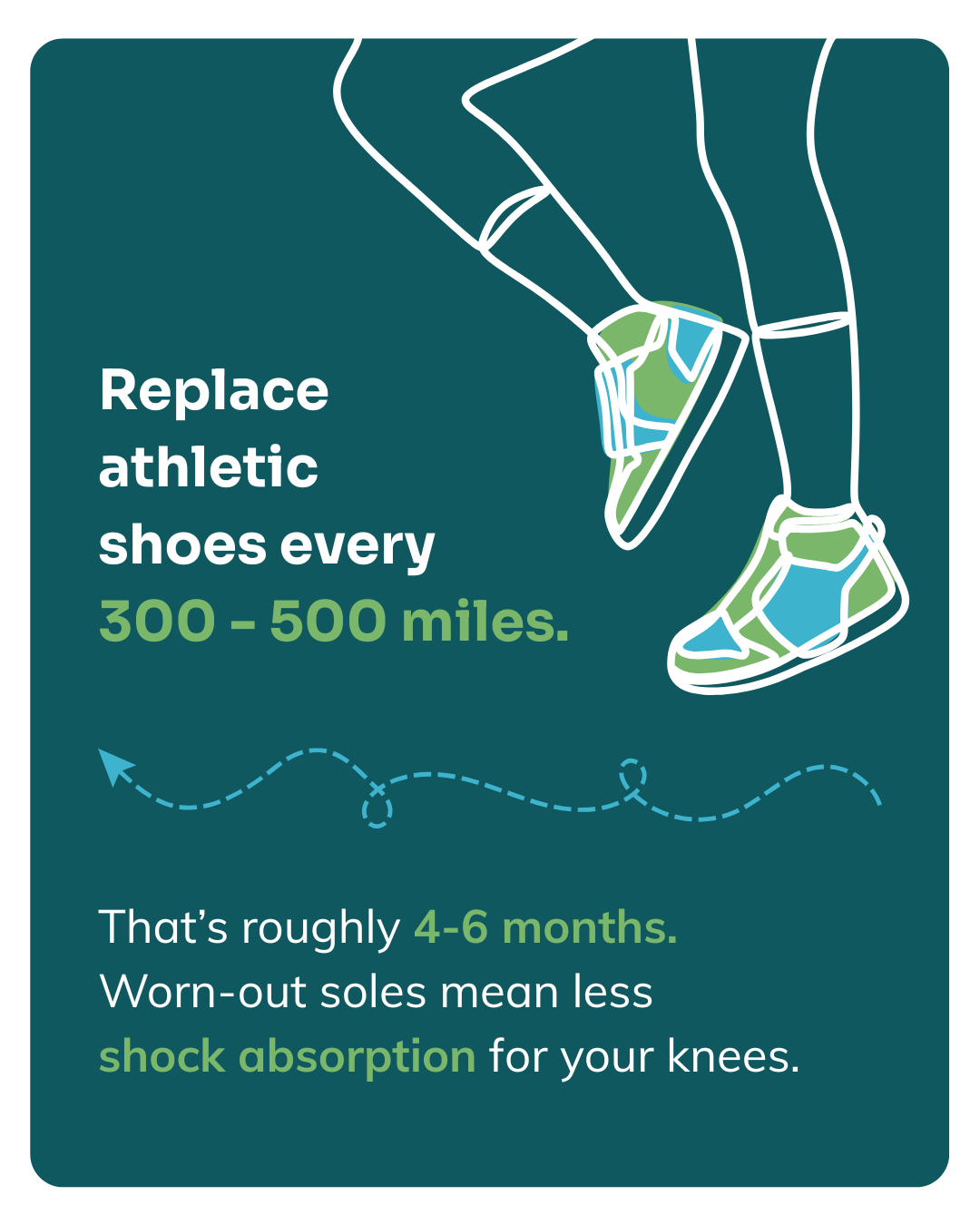
- Wear the right shoe for the right activity. Supportive, well-fitting footwear – designed for the way you move – cushions impact and keeps your knees from taking the full force of every step.
- Increase activity gradually. Sudden jumps in mileage, weight or workout intensity are a common cause of overuse injuries.
- Take movement breaks. Standing, stretching or walking around throughout the day helps prevent stiffness from long periods of sitting.
- Watch for early warning signs. Mild soreness can be normal, but sharp or lingering pain is your cue to rest and reset before it turns into a bigger setback.
What can I do at home to relieve knee pain?
For minor knee soreness or injuries, a little self-care can go a long way. Most people find the classic R.I.C.E. approach helpful for quick relief:
- Rest: Give your knee a break from high-impact activity.
- Ice: Apply for 15 to 20 minutes at a time to reduce swelling. Be sure to wrap ice in a thin, damp cloth or towel to prevent ice burn.
- Compression: Use a knee sleeve or wrap for support.
- Elevation: Prop your leg up so your knee is above heart level when lying down.
Over-the-counter anti-inflammatory medications and gentle stretching can also help. If pain improves within a few days, you know you’re on the right track.
The R.I.C.E. method has long been standard protocol for musculoskeletal injuries and is great for immediate relief. But for long-term recovery, two newer alternatives focus less on complete rest and more on balanced recovery to allow the process of inflammation to work:
- M.E.A.T. stands for Movement, Exercise, Analgesics (pain reliever) and Treatment, encouraging gentle motion and guided rehab instead of total immobilization.
- P.E.A.C.E. & L.O.V.E. expands on that idea with steps like Protection, Elevation, Avoid anti-inflammatories, Compression and Education, followed by Load, Optimism, Vascularization (increased blood flow to injured tissues) and Exercise as healing progresses.
A health care provider can tell you which method is right for you and help you build a recovery plan that fits your routine.
When should I get my knee pain checked out?
Trust your instincts. If something feels off and your mobility is limited, it’s worth getting evaluated. Get your knee checked out if you notice:
- Pain that lasts more than a few days or keeps coming back
- Swelling that doesn’t fully go away
- Stiffness or reduced range of motion
- Clicking, catching or feeling like your knee might “give out”
- Trouble walking, bending or going up and down stairs
- Difficulty kneeling, squatting or standing from a seated position
- You’re relying on pain relievers to get through the day
These signs don’t always mean something serious is going on, but they are good indicators that your knee should be evaluated before a small issue turns into something bigger.
When is a knee injury an emergency?
Some knee injuries are serious and require immediate care. It’s a good idea to go to your nearest ER if you experience any of the following:
- Severe pain
- Significant swelling that’s getting worse
- You can’t move your knee or put weight on it
- You heard a loud snap or pop when the injury happens
- The knee looks visibly bent or out of place
- You experience numbness in your lower leg or foot
Indigo is here for life’s twists and turns
Knee pain can make everyday movement harder than it needs to be. Let Indigo put the easy back in your step. Indigo Urgent Care treats most minor illnesses and injuries – including knee pain – so you can get back to moving comfortably and doing what you love without skipping a beat.
Walk into one of our convenient urgent care locations or book a same-day or next-day appointment online. All Indigo clinics have on-site digital X-ray services to rule out minor fractures, dislocations or joint issues, and we’ll even send you home with a pair of crutches if you need them. If your injury requires a higher level of care, we’ll coordinate a referral to a specialist.
If knee pain has you grounded at home, Indigo Virtual Care is another easy option. You’ll receive the same high-quality care from our board-certified clinicians – just from the comfort of your couch.
In person or virtually, Indigo is here from 8 a.m. to 8 p.m. every day, including weekends.