Whether you’re flying across the country, setting sail on a cruise, or heading out on a long road trip, motion sickness can quickly turn an exciting journey into an uncomfortable experience.
Motion sickness and travel-related nausea are some of the most common travel health concerns—and they can affect anyone, even seasoned travelers.
With a little preparation, motion sickness is often preventable.
At Indigo Urgent Care, we make it easy to get care when you need it—including before you travel. Our clinicians can help you understand your risk, recommend prevention strategies, and prescribe medications when appropriate so you can travel more comfortably.
What Is Motion Sickness?
Motion sickness happens when your brain receives mixed signals from your eyes, inner ear, and body.
For example:
- Your eyes may be focused on a book or screen
- Your inner ear senses movement (like a car or plane in motion)
This mismatch can lead to nausea and other symptoms.
Motion sickness commonly occurs during:
- Flights
- Cruises or boat travel
- Road trips
- Bus or train rides
- Amusement park rides
What Are the Symptoms of Motion Sickness?
Symptoms can start quickly and range from mild to severe.
Common symptoms include:
- Nausea
- Vomiting
- Dizziness
- Sweating
- Headache
- Fatigue
- Loss of appetite
For some travelers, symptoms improve once the motion stops. For others, they can linger and disrupt the rest of the trip.
What Causes Travel Nausea?
Travel nausea is often triggered by motion, but other factors can make it worse:
- Reading or using screens while moving
- Sitting in areas with more motion (like the back seat or lower decks)
- Strong odors (fuel, food, or perfume)
- Anxiety about travel
- Dehydration
- Traveling on an empty stomach—or overeating
Understanding your triggers can help you prevent symptoms before they start.
How Do You Prevent Motion Sickness?
The best treatment is prevention.
Here are some of the most effective ways to reduce your risk: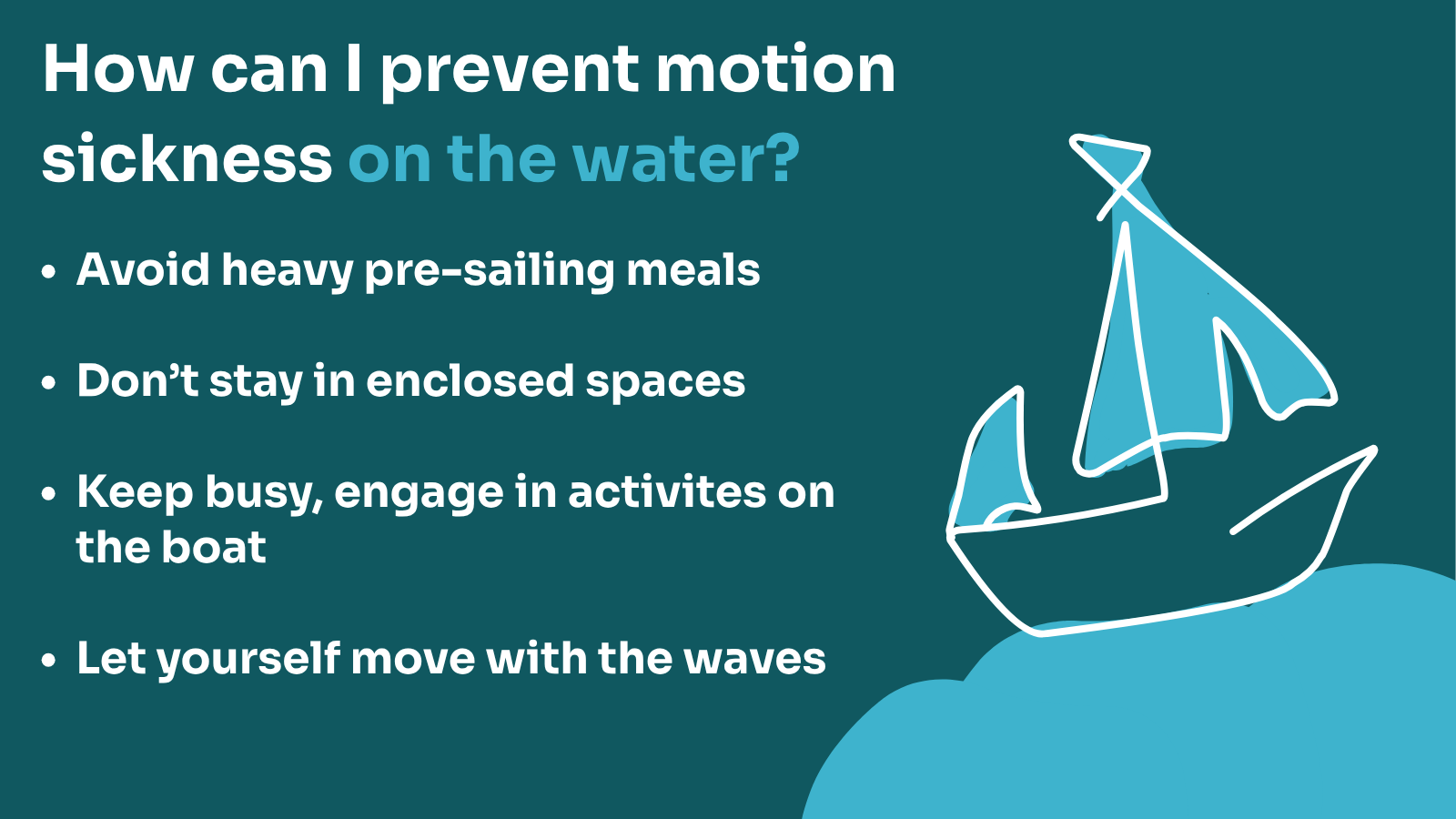
Choose the Right Seat
Where you sit can make a big difference:
- Car: Sit in the front seat and look ahead
- Plane: Choose a seat over the wing for less turbulence
- Cruise: Stay in a mid-ship cabin near the waterline
Focus on the Horizon
Keeping your eyes on a stable point (like the horizon) can help your brain better process motion.
Avoid reading or scrolling on your phone while moving if you’re prone to symptoms.
Stay Hydrated
Dehydration can make nausea worse. Drink water regularly before and during your trip.
Eat Light, Regular Meals
An empty stomach—or a very full one—can both trigger symptoms. Stick to light, balanced meals and avoid greasy or heavy foods.
Get Fresh Air
Ventilation helps. Open a window in the car or use overhead air vents on a plane.
Limit Alcohol
Alcohol can worsen dehydration and increase sensitivity to motion.
Try Natural Remedies
Some people find relief with:
- Ginger
- Acupressure wristbands
While these don’t work for everyone, they can be helpful for mild symptoms.
Can You Take Medication for Motion Sickness?
Yes—over-the-counter and prescription medications can help prevent or reduce symptoms.
Options may include:
- Antihistamines
- Anti-nausea medications
- Motion sickness patches
Medication is especially helpful if you:
- Have a history of motion sickness
- Are going on a cruise or a long flight
- Can’t avoid common triggers
- Have important travel plans where symptoms would be disruptive
At Indigo Urgent Care, our clinicians can help determine which option is right for you and prescribe medication when appropriate.
When Should You Seek Care for Travel Nausea?
Mild motion sickness can often be managed with simple strategies.
But you should seek medical care if you have:
- Persistent vomiting
- Severe dizziness
- Signs of dehydration
- Symptoms that don’t improve after travel ends
It’s also a good idea to get checked out before your trip if you:
- Frequently experience motion sickness
- Have upcoming travel where prevention is important
- Are unsure which medications are safe for you
Planning a Trip? Prepare Before You Go.
Motion sickness is one of the most common travel issues—and one of the easiest to plan for.
A quick visit to Indigo Urgent Care can help you:
- Understand your risk for motion sickness
- Get personalized prevention tips
- Discuss treatment options
- Receive prescriptions when appropriate
Planning means fewer interruptions to your trip—and more time enjoying where you’re going.
And if symptoms show up before or after your travel, we’re here to help.
Travel with confidence this season. Get ahead of motion sickness and travel nausea with Indigo.
For more ways to stay healthy while you travel, explore our full library of travel health blog topics. From altitude sickness and motion sickness to common concerns like traveler’s diarrhea, you’ll find practical tips to help you prepare. A little planning can go a long way toward making your trip smoother, safer, and more enjoyable.