Summer travel should be about making memories—not managing unexpected health issues.
If your summer travel plans include flying overseas, heading out on a road trip, boarding a cruise, or planning a mountain getaway, a little health planning before you leave can make a big difference.
From motion sickness and stomach issues to altitude sickness and travel-related nausea, common travel symptoms can quickly disrupt your plans. The good news? Many travel health issues can be prevented—or treated early—with the right preparation.
At Indigo Urgent Care, we make it easy to get care when you need it, including before you travel. If you need guidance on travel medications, help preparing for an international trip, or treatment for symptoms before departure, our team is here to help you feel ready for takeoff.
Here’s what to know before your next trip.
Why Travel Health Planning Matters
Travel often means changes to your routine—different food, new environments, long travel days, changes in elevation, and close contact with large groups of people.
These changes can increase your risk of:
- Dehydration
- Motion sickness
- Stomach illness
- Nausea and vomiting
- Altitude sickness
- Exposure to viruses or infections
Planning ahead can help reduce your risk and help you know what to do if symptoms appear.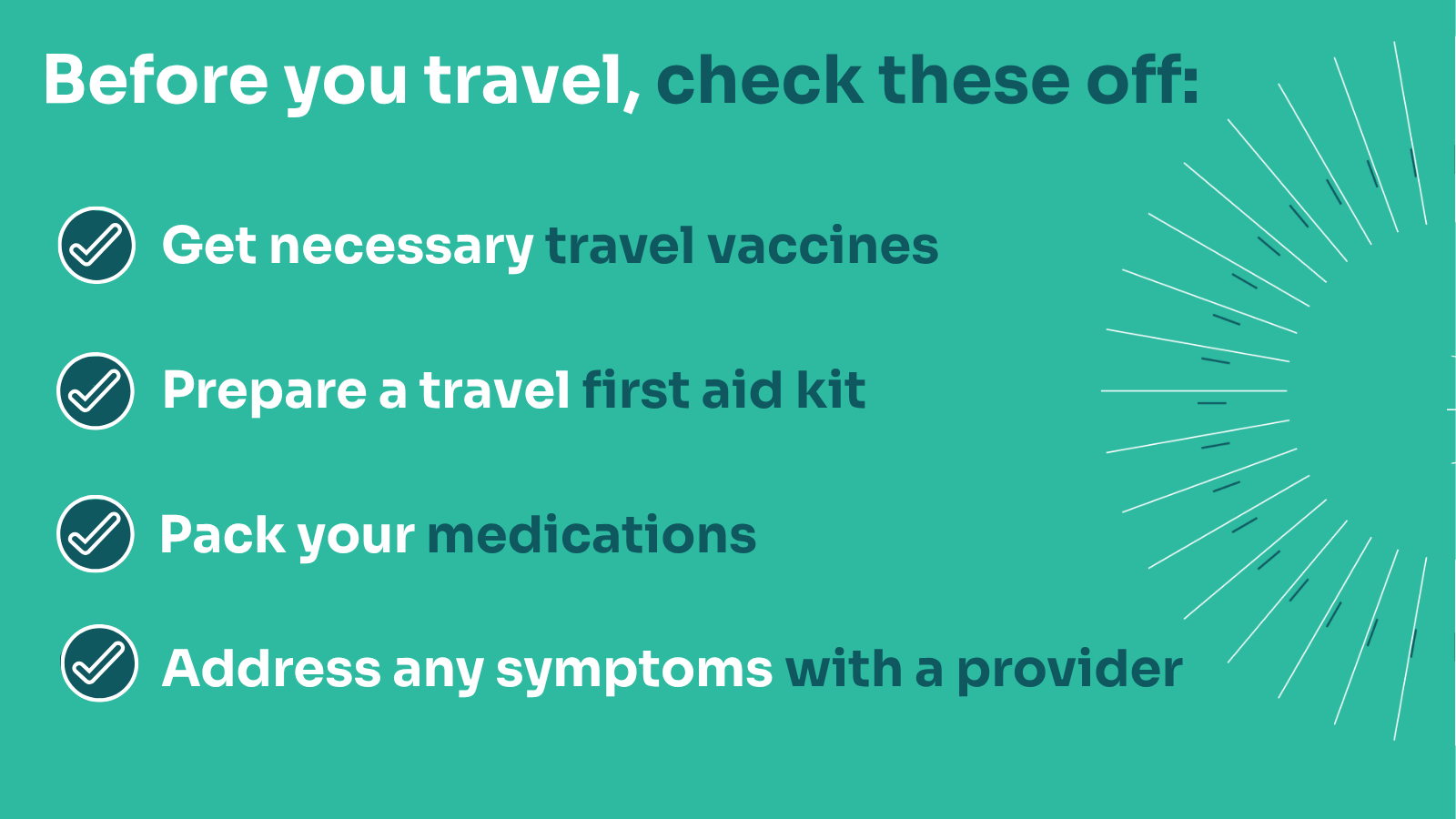
A quick urgent care visit before travel can help you:
- Address symptoms before they worsen
- Get prescriptions for travel-related concerns
- Build a travel health plan
Know what warning signs to watch for while away
If you’re wondering how to prepare for travel health-wise, start with these basics.
- Pack a Travel Health Kit
A small travel health kit can save time and stress if symptoms start while you’re away.
Consider packing:
- Pain relievers
- Anti-nausea medication
- Motion sickness medication
- Electrolyte packets
- Anti-diarrheal medication
- Bandages
- Hand sanitizer
- Any prescription medications
If you’re traveling internationally, make sure you bring enough medication for your full trip.
- Know Your Destination Risks
Different destinations come with different health considerations.
For example:
Mountain destinations may increase your risk of altitude sickness.
Learn more about preventing altitude sickness in our guide on altitude-related travel symptoms.
International travel may increase your risk of foodborne illness or traveler’s diarrhea.
We’ll cover how to prevent and treat travel-related diarrhea in our traveler’s diarrhea guide.
Cruises, flights, and road trips can trigger motion sickness and nausea.
Our motion sickness guide covers prevention and treatment options.
- Don’t Ignore Symptoms Before You Leave
If you’re already dealing with symptoms before travel—like nausea, stomach issues, dizziness, or dehydration—it’s worth getting checked out.
Travel can sometimes make even minor symptoms feel more severe or difficult to manage.
Urgent care can help evaluate symptoms and recommend treatment so you can travel more comfortably.
Common Travel Health Issues to Watch For
Here are some of the most common health concerns travelers experience.
Altitude Sickness
Altitude sickness happens when your body struggles to adjust to higher elevations.
Common symptoms include:
- Headache
- Dizziness
- Nausea
- Fatigue
- Shortness of breath
This can happen on mountain vacations, hiking trips, or travel to higher-altitude destinations.
If you’re planning travel to an elevation, prevention matters.
Check out our full guide on altitude sickness prevention and treatment.
Traveler’s Diarrhea
Traveler’s diarrhea is one of the most common travel-related illnesses—especially during international travel.
Symptoms often include:
- Frequent loose stools
- Stomach cramping
- Nausea
- Vomiting
- Dehydration
Food safety and hydration are key to prevention.
We cover this in more detail in our traveler’s diarrhea blog.
Motion Sickness
Motion sickness is common during:
- Cruises
- Flights
- Road trips
- Train travel
Symptoms may include:
- Nausea
- Dizziness
- Sweating
- Vomiting
The right medication can help prevent symptoms before they start.
Our motion sickness blog will break down your best options.
Nausea and Vomiting While Traveling
Nausea can happen for several reasons while traveling:
- Motion sickness
- Food poisoning
- Viral illness
- Dehydration
- Altitude changes
If nausea becomes persistent or leads to dehydration, getting medical care quickly is important.
At Indigo, our clinicians can evaluate symptoms and discuss treatment options, including antiemetics when appropriate.
Should You Visit Urgent Care Before International Travel?
If you’re traveling internationally, it may be smart to plan a visit before you leave.
Urgent care may be able to help with:
- Travel-related illness concerns
- Prescription refills
- Symptom treatment before departure
- General travel health guidance
International travel often comes with increased exposure to unfamiliar foods, water sources, and environments, making preparation especially important.
If you’re cruising, traveling abroad, or visiting remote destinations, it’s better to prepare before symptoms start.
When Should You Seek Medical Care While Traveling?
Seek care if you experience:
- Severe vomiting
- Signs of dehydration
- Persistent diarrhea
- Trouble breathing
- Severe dizziness
- Confusion
- High fever
And if symptoms start before your trip, getting evaluated early may help you avoid disruptions altogether.
Travel With Confidence This Summer
Travel plans can change fast—but getting care shouldn’t be complicated.
If you’re preparing for an international vacation, cruise, mountain trip, or family road trip, Indigo Urgent Care makes it easy to get care on your schedule.
Book ahead or walk in for help with travel-related symptoms, treatment options, and last-minute care before your trip. With in-person and virtual care options, you can get the support you need—when and where you need it.
Don’t let preventable travel health issues interrupt your summer plans. Get ahead of them with Indigo.